Content written by the Educators Council team, originally published as the December 2025 Educators Newsletter.
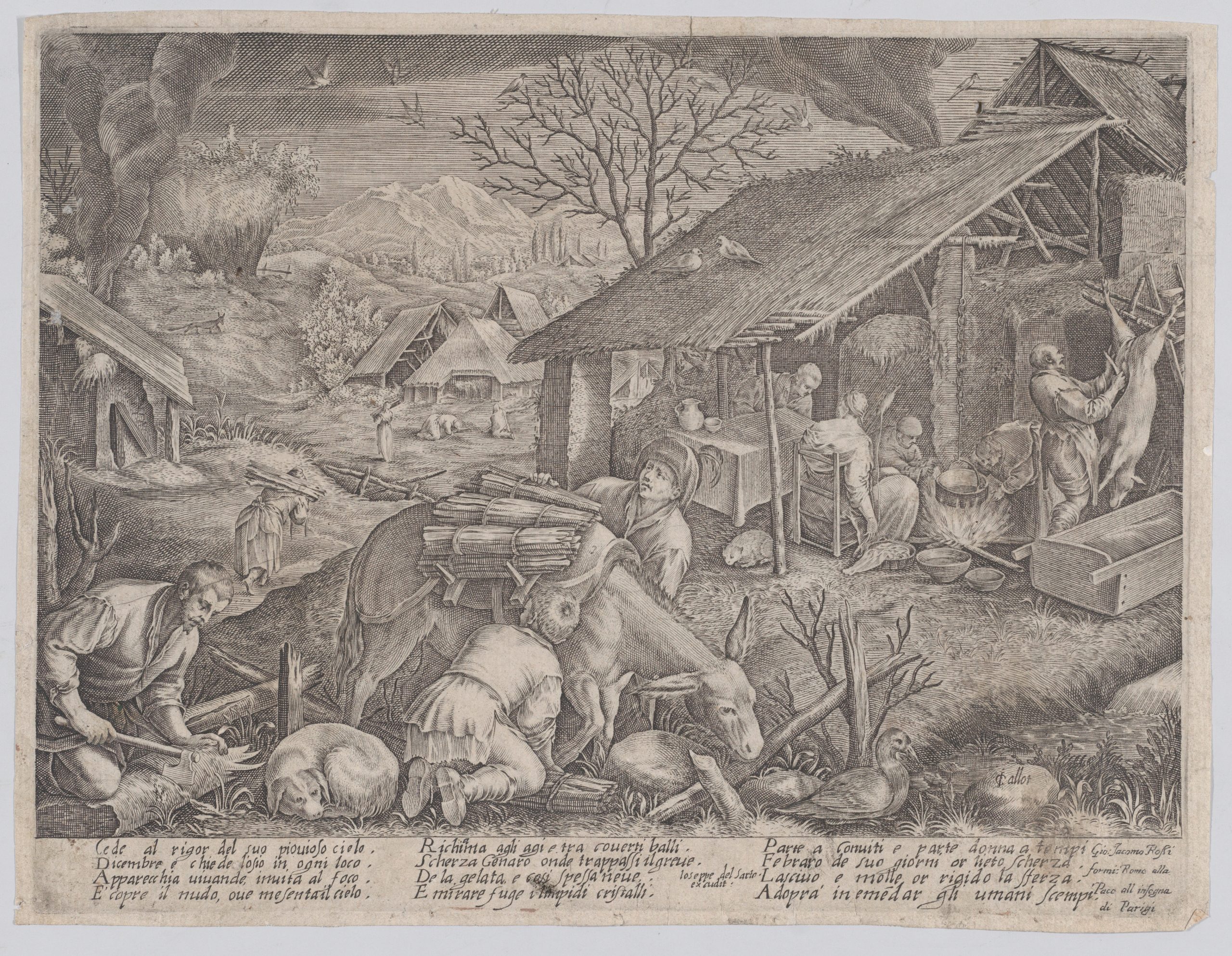
Image credits: Jacques Callot, L’Hiver (Winter), ca. 1610, Metropolitan Museum of Art. Public Domain.
For most of human history, winter was the season that shaped communities more than any other. Cold, darkness, food scarcity and isolation meant that survival depended not on individual strength but on how well people worked together. Across Europe, including Britain, winter prompted shared labour, shared resources, and shared rituals designed to lift spirits and keep households connected.
Many of the traditions we now associate with Christmas, New Year, and the “festive season” began simply as collective strategies to endure winter: exchanging small gifts, singing together, sharing food, blessing orchards, and supporting neighbours who were struggling. Far from being purely celebratory, these traditions were born from a time when cooperation was essential for survival.
For teachers, winter customs offer a rich way into discussing community resilience, social responsibility, and seasonal rhythms of the past. They show students that behind today’s festivities lies a deep history of people helping one another through the hardest part of the year.
Winter Survival Through Community
For most of history, no one survived winter alone. Villages relied on coordinated cooperation to get through the coldest months. Food was carefully managed through communal stores, rationing, and shared tasks like collective butchering and preservation, timed to the late-autumn slaughtering season. Households pooled resources such as fires, fuel, tools, and labour, while winter jobs. Weaving, mending, and woodcutting were often done collectively to save time and warmth. Crucially, communities took responsibility for the elderly, sick, and vulnerable, ensuring that everyone had enough to endure the lean months.
These traditions of cooperation fed directly into early winter feasts. Far from being purely celebratory, feasting was originally tied to seasonal necessity: using meat that could not be kept fresh, sharing it so nothing was wasted, and boosting morale when daylight was shortest. These gatherings acted as early forms of winter redistribution, a way of reinforcing the principle that survival depended on the whole community pulling together.
How Winter Survival Traditions Shaped Festivities
Many of the traditions we associate with Christmas today grew out of a much older reality: winter was the hardest time of year, and communities survived it by supporting one another. Long before Christmas took its modern form, villagers relied on shared food, shared warmth, and shared labour to make it through the dark months.
One example is early winter gift-giving. In 17th century England, apprentices kept “Christmas boxes” into which customers dropped coins during the season, small contributions that helped a young worker afford winter comforts . Samuel Pepys noted in 1667 that he “dropped money at five or six places” to support tradespeople he depended on. Even Quakers like Sarah Fell, who rejected holy days, exchanged winter gifts such as venison with neighbours. As modern heritage organisations note, these gifts were originally acts of mutual support, not luxury.
One of the most powerful winter-survival traditions is wassailing. Historically tied to Twelfth Night, communities would gather in orchards to “wake” the trees for a good harvest singing, dancing, and making noise (pots and pans often featured) to scare off evil spirits. A shared wassail bowl was passed around, filled with spiced cider or ale, symbolising good health and community togetherness. The word “wassail” itself comes from Old English was hál, meaning “be hale” or “be healthy,” underlining the communal wish for well-being.
For students, these traditions offer a powerful lesson: the “holiday spirit” was not originally about celebration, but cooperation. Teachers might invite classes to explore how historic winter customs reflected the need for community and compare them with modern winter charities, food banks, or school kindness initiatives. Understanding these roots helps young people see Christmas as part of a long history of people helping one another through the cold.
Rediscovering the Spirit of Winter
Winter has always tested human resilience, but it has also revealed our greatest strength: community. From shared fires and communal food stores to wassailing bowls and early gift-giving, the traditions that shaped our festive season were born from a simple truth, people survived winter by supporting one another.
As you explore these customs with students, there’s a powerful opportunity to highlight how communities in the past faced hardship with creativity, cooperation, and generosity. Whether through discussions on seasonal labour, craft activities inspired by historical winter tasks, or reflections on how we support others today, these stories can help young people see winter not just as a time of cold and scarcity, but as a reminder of our capacity for collective care.
Built With You
We have big plans for developing even more educational resources.
These will be built in close collaboration with our Educators Council, which is free and open to any educators to join.
Thank you for joining us on this journey through winter’s history. We hope it sparks ideas, conversations, and classroom moments that warm the season ahead.