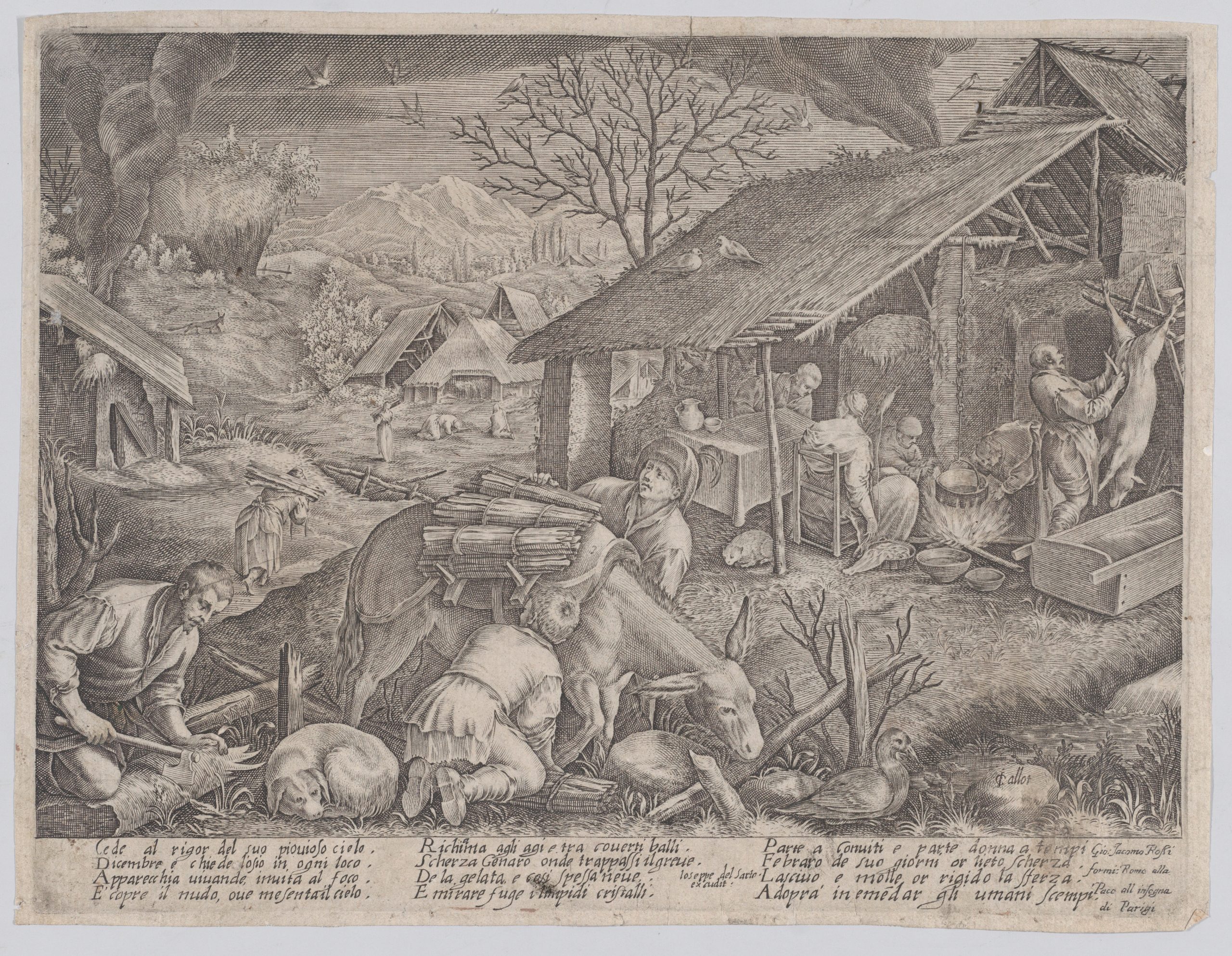
Winter as a Human Challenge
Content written by the Educators Council team, originally published as the December 2025 Educators Newsletter. Image credits: Jacques Callot, L’Hiver (Winter), ca. 1610, Metropolitan Museum of Art. Public Domain. For most of human history, winter was the season that shaped communities more than any other. Cold, darkness, food scarcity and isolation meant that survival depended not on individual strength but on how well people worked together. Across Europe, including Britain, winter prompted shared labour, shared resources, and shared rituals designed to lift spirits and keep households connected. Many of the traditions we now associate with Christmas, New Year, and the “festive season” began simply as collective strategies to endure winter: exchanging small gifts, singing together, sharing food, blessing orchards, and supporting neighbours who were struggling. Far from being purely celebratory, these traditions were born from a time when cooperation was essential for survival. For teachers, winter customs offer a rich way into discussing community resilience, social responsibility, and seasonal rhythms of the past. They show students that behind today’s festivities lies a deep history of people …