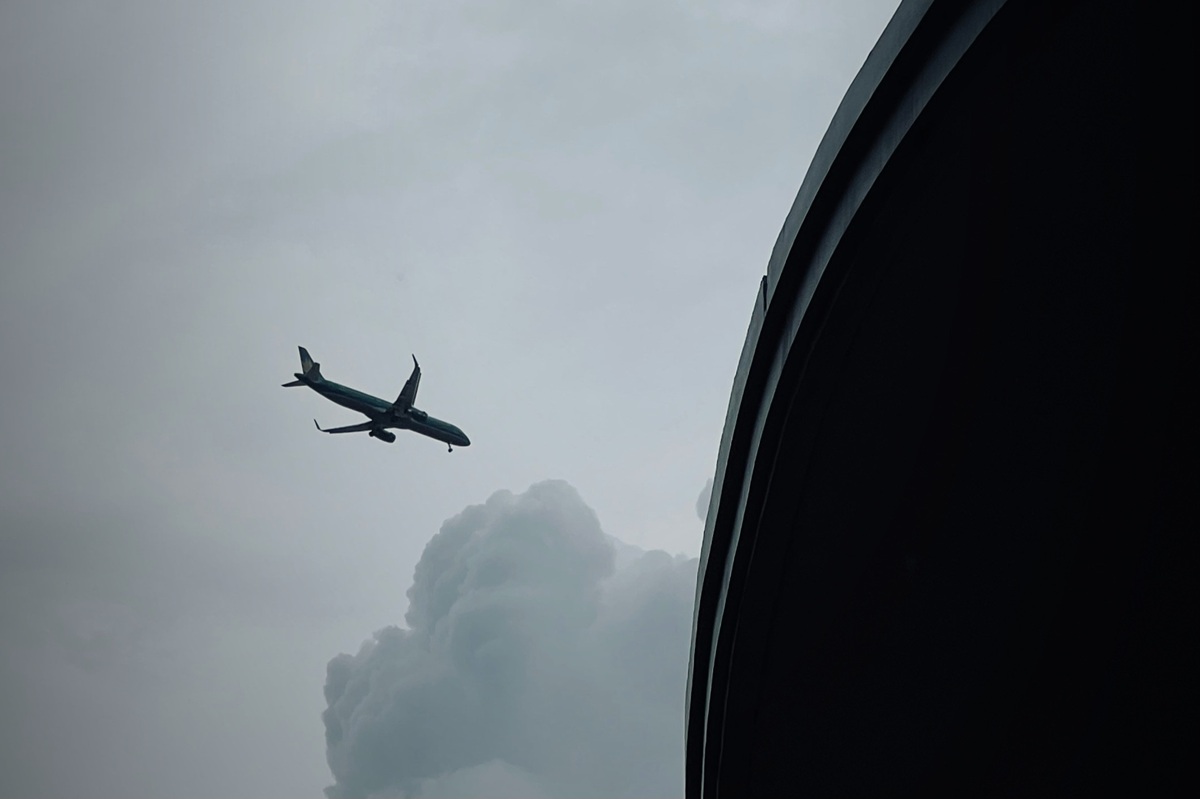
Photo credit sky
Sunday, 27 March 1977 (18 minutes read time)
written by Senthan Thomas Sivasangar
The skies are grey and filled with the hum of jet engines.
“Sunjet two-eighty-two, proceed directly to runway … backtrack and hold.”
Every few seconds, the radio buzzes, bringing with it the crackle of another faceless voice.
“Received, Sunjet two-eighty-two.”
The transmissions are ugly and off-putting, punctuated by screeches and stutters that grate against the ears, but there is harmony to be found among them, a rhythmic call-and-response between towers and cockpits.
“Scandi one-four-two-zero, cleared for take-off. After departure … turn right heading zero-four-zero… Happy flying.”
“Scandinavian one-four-two-zero, now at take-off … Good afternoon, tower.”
Beneath the cloud of noise Robert Bragg shuffles impatiently in his seat. Beside him is his superior, Captain Victor Grubbs, to whom he glances, receiving a tightening of the lips in response. He scans the dials between them, which stare blankly back, all of them pointing towards the left, towards their minimums.
Their plane isn’t moving, and hasn’t been for over half an hour.
When Bragg squints through their cockpit window a blurred behemoth of blue, identical to their own but for the colour, stands like a statue ahead.
“Christ, when will this KLM get to shifting?” he mutters.
“They want to refuel first,” Grubbs replies, his voice filling the cockpit. “Can’t blame ’em. Not their fault Las Palmas got shut down.”
“Yeah, what happened over there anyway?” Their flight engineer, George Warns, pokes his head forward from behind them, trying to make out the shape of the KLM flight.
“Bomb, apparently,” the Captain shrugs with a wave of the hand. “Right by the check-in counters, but it’s clean now. They’ve searched the place.”
Warns shakes his head.
“Hate flying this neck of the woods. That sort of thing just doesn’t happen back home.”
A murmur of agreement swims across them all, and they return to their rudimentary scans of whatever instruments they have in front of them. Bragg checks them off in his head, one by one: Engines, still idle. Park brakes, still engaged. Ass, still sore.
“Can’t we squeeze past them?” Warns’ voice squeaks up again, and he draws his finger to the empty, but narrow, space beside the KLM.
Grubbs peers forward, then grimaces.
“I asked tower ten minutes ago. Not enough wingtip clearance — according to them, we’re a half-foot too wide.”
Bragg sighs, eyes still glued to the instruments that tell him nothing: “Yeah, that’s seven-forty-sevens for you.”
In spite of it all, he masks a grin. Sure, these aren’t the moments pilots live for, but as he runs his fingers over the engine pressure dials, the thought falls gently over him like warm air: he is flying a Boeing 747. When the jet was introduced, it was — in more ways than one — a place in the sky. Only the best of the best pilots would ever get to say they sat in a 747’s cockpit, even fewer would say they got to fly it to Tenerife and back, and yet here he was, the boy from Alabama, fiddling with the the knobs and levers of man’s most ambitious invention, on an island that most would only ever see on a travel agent’s brochure.
Mind you, it looks far better on the brochures, he thinks to himself, raising his eyes once again to the airfield, shrouded in a horrid layer of darkened fog. Can’t see the end of your nose out there.
The radio buzzes back to life over their headsets, and on comes the gruff voice of Captain van Zanten.
“Tenerife, KLM four-eight-zero-five. Refueling is complete, requesting engine start-up.”
Grubbs sits upright.
“KLM four-eight-zero-five, cleared to start engines.”
Bragg does the same, clearing his throat: “Tenerife, we’re ready to go as well, Clipper one-seven-three-six.”
The men in the cockpit tilt their headsets, as if it would make the words arrive sooner:
“Clipper one-seven-three-six, you’re cleared for start-up.”
The voice is fuzzy, as it has been for the last hour, and the controller’s accent is difficult to make out, but all that matters is what he says. With a breathless laugh and a smile flashed between them, the crew stir to life, running through their checklists and leaning from one toggle to the next.
“Throttle is at idle, engine area is … clear.”
“Engine One start-up switch.”
“Fuel flow, check.”
Bragg lifts the intercom to his lips, making the relief in his voice heard to the three hundred and eighty people on-board: “Cabin, this is your First Officer speaking, pleased to announce we’ve been cleared to get moving. Thank you for your patience, we should have you in the air real soon.”
Muffled beyond the cockpit door, the cabin utters a spattering of claps and cheers as the machinery around them whirs awake. From either side, the engines grow from an idle whistle to a steady hum to a thunderous roar. A pattern of beeps plays to the pilots, as if the aircraft itself is celebrating, and the air of the cockpit is filled with the zest of tangible anticipation, like sparks flying from one man to the next. Ahead of them, the KLM begins its roll as the controller instructs both flights behind a blanket of persistent static: “KLM four-eight-zero-five … proceed direct to end of runway. Clipper one-seven-three-six, follow and take … first exit.”
The sparks between them settle as the world beyond the cockpit window begins to move, first inch-by-inch, then foot-by-foot, the KLM’s silhouette disappearing into the fog ahead towards its take-off position. When it is lost to the distance, there isn’t much to see beyond the painted concrete directly ahead — they are still hidden within that thick layer of cloud — but the feeling of landing gear rolling beneath him is enough for Bragg. The smile he once hid leaks through to his cheeks.
The crew are still exchanging confirmations, deploying read-outs of the numbers in front of them, when Bragg sees the first exit on the paper map to his side. His smile weakens, and his hesitation turns into a confused murmur: “Have we heard them right?”
“Hm?” Grubbs raises a brow in his direction.
Bragg shakes his head, raising his voice this time: “Did he say the first?”
“I think so,” Grubbs replies with a pout, but running across his expression is the same hesitation. “Why?”
“Look at it,” Bragg replies, nodding towards the map. The exit is narrow, decorated on either side by grass patches, and, most noticeably: “It’s at least ninety degrees. That’s way too tight.”
“Well, the second is only a forty-five,” Warns adds. “Maybe he meant that one?”
“I’ll ask him again,” Bragg says, turning his attention to his headset once more. “Tower, confirm you want Clipper one-seven-three-six to turn left, first exit off the runway?”
The response is crackled, and in the background of the transmission is the sure sound of TV static. TV on the job, Bragg smirks. If only.
“Uh, can you repeat that, Tenerife?” Grubbs intercedes, to which the tower replies again, an air of impatience in the controller’s voice: “The third one, sir. One, two, three, third. The third one.”
Warns chuckles. “Uno, dos, tres,” he jokes.
“Uno, dos, tres,” Bragg returns an absent-minded chuckle. With a glance to the Captain, whose eyes are fixed firmly on the nothingness outside, he grasps the plastic handle of the flaps lever. “Wing flaps?”“Indicate ten,” Captain Grubbs replies, like clockwork. “Leading edge lights are all green.”
“Got it,” Bragg mutters, pulling the lever down to ten degrees, feeling the jet loosen up beneath them almost immediately.
“Check rudder,” Warns suggests, and the Captain replies with two rudder inputs to either side. Warns turns back to the wall of electronics to his side and confirms: “Checks. Have you seen the exit yet?”
The radio squeals a quiet exchange between the controller and another flight, but Bragg hardly hears what they say.
“Can’t see anything out there,” he scrunches his face, leaning forward to scan the ground beyond the cockpit window. An opening appears to their left, and his eyes snap towards it. On either side are clean-cut lawns of green, and running down its middle is a thin line of faded yellow paint. For a moment, the crew believe it to be theirs, but as it reveals itself from the fog, it clearly is not.
“That’s the ninety-degree,” Grubbs says, and Bragg nods.
Okay, so that’s exit one.
The exit grows to their side, then disappears beyond the window-frame.
Two to go.
Warns and Grubbs exchange brief confirmations on the weight of the plane, the length of the runway, more magic numbers and measurements, but all Bragg can think about is the turn they haven’t made yet. Something doesn’t feel right about their route. Maybe they count them differently here, he thinks, as another exit emerges into sight. This one has a small yellow placard by its mouth, and painted in bold black paint are the symbols “C-3”. This can’t be the third, he begins in his mind, before raising a finger forward and finishing out loud: “Is that …?”
“It can’t be,” Grubbs looks to where Bragg is pointing and tightens his lips. “That’s another ninety-plus.”
“Gotta be the second,” Warns adds. “Next one’s forty-five, so that one’s ours.” He looks to the map beside Bragg. “I think so, anyway.”
The cockpit descends into silence. Where there were once sparks of excitement, there is now the black and tangled shroud of trepidation. Through the window is nothing but cloud, and Bragg tenses in fear of what might lay within it. Grubbs picks up on the anxiety running through his crew like plague.
“We’ll be okay,” he assures them both. “Just like any other airport.”
Just like any other airport, except there’s a plane getting ready to take off a mile ahead of us.
As if reading his mind, Warns pipes up again, a slight waver in his voice: “They’re not moving yet, right?”
“The KLM?” Bragg shifts in his seat and turns to Warns. “I don’t think they’ve got clearance yet.” He looks at the Captain. “Do they?”
Right on cue, the radio fizzles to life again. Captain van Zanten’s voice forces its way through the cracks: “KLM four-eight-zero-five, ready for take-off. Awaiting ATC clearance, Tenerife.”
“KLM four-eight-zero-five, cleared for Papa Beacon, climb to and maintain flight level niner-zero, right turn after take-off, heading zero-four-zero, until you intercept the three-two-five radial from Las Palmas.”
Words, words, words, Bragg thinks, but he feels the beat of his heart turn ice-cold, a feeling that worsens as Captain van Zanten replies, slurring his words behind a Dutch accent and even more static: “Roger, sir, we’re cleared to Papa Beacon, flight level niner-zero to three-five-two. We’re now at take-off.”
“Stand-by for take-off,” is the response from the tower. “I will call you.”
Before the tower has finished, Bragg scrambles for the radio. They can’t be at take-off. The dread shoots across his mind like a bullet as he forces the words out, loud and clear: “Tenerife, we’re still taxiing down the runway, Clipper one-seven-three six.”
As the words leave his lips, he glances around at Warns, who is looking back with hollowed cheeks and a face going quickly pale with the realisation. They both look to their Captain, whose eyes are wildly scanning the runway ahead, brow furiously creased. He doesn’t look back, but Bragg and Warns can hear the voice muttering between his ears: They can’t be at take-off.
“Roger, one-seven-three-six, report when runway is clear,” the tower replies, its background TV static mixing with the resident radio static, amalgamating into a horrid whooshing sound.
For a moment, the cockpit fills with a sigh of relief. We’re safe, Bragg reassures himself. They know where we are. The fog rolls still beyond the window, and the silhouette of another exit placard appears in the fog. Almost there, almost there, he repeats in silence.
The flight creeps forward at an agonising pace, the engines still whirring it on towards the exit. Bragg bites his lip, throwing an imaginary rope towards the exit and pulling with all his might to get them clear of the runway. Sure, the airport knows where they are, but it’s unnatural in any case for a plane like Bragg’s to be taxiing across a runway. In a larger airport, he might feel a little steadier, where planes take off in their clear-cut paths like bees, little buzzing lights in the distance. But Los Rodeos is half the size of any airport back home.
The air shifts once more, and Bragg perks up. He furrows his brow at the instruments in all directions as his chest stutters, consumed once more by the feeling that it might snap from the cold strike of dread. Engine pressure is fine, he shakes his head. Wind is consistent, no warnings active …
It dawns on him slowly, like the gentle drop of rain before a storm, what his subconscious is hearing, and he turns his attention to the cockpit window, focusing on the sound behind the hush until he hears it, clear as day.
The runway is rumbling.
“Is he …?”
The rest of the sentence falls away from him, and nobody replies, bouncing their eyes instead across one another before looking ahead of their plane.
At first, it is fog, and it is empty. They hold their breath, surrounded by that soft but sure echo of rubber against tarmac.
Then, in the distance, a set of lights appear. Small, white things, muffled by the fog and flanked by even smaller coloured lights, one red, one green. At first, they don’t seem to be moving at all. Maybe we’re just close enough to see them now, Bragg lies to himself. Maybe we couldn’t hear them until now. They can’t be at take-off.
But the harsh glare of the reality burns into them as the lights float further and further apart.
“I think he’s coming,” Warns mutters, disbelieving, as if even saying it out loud would be a jinx.
They keep their eyes trained on the arrangement of dim glows, as they grow in size, doubling, then tripling, and like a predator behind overgrowth, the darkened mass of the flight takes shape behind them. The snap of dread turns into the fire of horror as the shape bears down on them, a tidal wave of darkness hurtling towards where their blood is only now forcing them into action.
“Goddammit, that son-of-a-bitch is coming!” Grubbs utters a strained yell as he scrambles the engine throttles to their limits and yanks his control column to one side. Instinct is the only thing driving their plane now.
“Get off!” Bragg screams, the rumble of the runway turning into an earthquake, grabbing the plane by its shoulders and shaking it furiously, a God with its plaything. “Get off! Get off!” He grabs his control column and pushes the plane to the left with the Captain, pulling his eyes away from the 747 headed straight for them and instead towards the exit only seconds away.
Come on! Come on!
His plane groans under the stress of the sudden turn he is pushing it into, and all of a sudden its groan is compounded by a flash of sparks, illuminating the fog like orange lightning. When Bragg looks back to the runway, the darkness has turned into the blue hulk of the KLM air-giant, its nose forced up so high that he can see the red flashing beacon light on its belly. The back of the plane is dragging across the runway behind it, where orange embers are flying out like gun-fire. Its black shadow fills the cockpit, and for a moment the world stops.
The engines, now pushing his plane forward with all their might, roar in desperation but Bragg swallows, weakening his grip over his control column. His mind bleaches itself clear, leaving one quiet thought, a paper bird amidst a hurricane: But they can’t be at take-off.
Impact.
It feels like the Earth itself cracking open at their feet. It feels like two atom bombs splitting themselves apart into a crater of destruction. It feels like searing heat, like dizzying noise, like blinding light and a furious, crippling paralysis beneath it all. It feels like death, and for a while, it is.
Bragg opens his eyes.
The first thing he feels is daylight against his skin. A dream, he wonders. A nightmare that got away from us. He is almost relieved.
But then the daylight dims. His vision unblurs and his eyes grasp from one pane of shattered glass to another. On the floor are scraps of metal and patches of drying blood. The soundscape comes down like rock-fall: first screams, then sirens, then the relentless crackle of flames. Above him, a giant trail of thick, black smoke covers the skies, where there was once the cockpit’s ceiling.
His consciousness falls back into its shell, and adrenaline rips him clear of his seat.
“The engines,” he hears a moan, and turns to the Captain, who is also stirring awake. With bloodied fingers, Grubbs points towards the throttle switches. “We need to turn them off.”
Bragg turns to the switches, fearing the explosion that could still yet happen if the fuel continues to run towards the engines. He is lifting his elbows to clear the dangling wires when his feet shake at the realisation: “They’re gone, Captain,” he croaks, his throat clogged with smoke and his voice not yet come to him. “We need to—” He interrupts himself in a fit of coughs as Warns forces himself free of his harness behind them. “We need evac.”
The Captain stumbles to his feet, rubbing a hand against his neck as he looks to the door leading to the cabin behind them.
“The passengers,” he wheezes. “We need to check on the cabin crew.”
He rests a hand on the door’s knob, but no sooner has it made contact as the cockpit is filled with a scorching hiss, and he recoils with a pained cry. Bragg and Warns rest hands on the Captain’s shoulders and pull him back.
“It’s gone,” Warns realises out loud, his voice weak. “I can hear it burning, it’s … it’s all gone.”
They pause, flailing their gazes desperately for a respite that never comes, before exchanging defeated glances.
Bragg turns to where the window once was, where now a field of jagged points and fizzling wires point towards their exit. He pushes against the pain in his thighs to lean over the cockpit’s remaining instruments, peering out through the smoke.
“Get out,” Warns sputters behind him. “We need to …” The sentence falls away behind a grating cough, but Bragg nods back, knowing what he intends for them to do.
“It’s a forty-foot drop onto concrete.”
He doesn’t mean it as a deterrent, but neither Grubbs nor Warns takes it as one. With a silent but assured confirmation, the three of them decide it is all they have.
Bragg goes first, grabbing hold of what remains of the ceiling to hoist himself into the space between. Fog has been replaced by the putrid stench of burning fuel, and when he turns around he sees fixtures where beams of metal have wrenched themselves free, as if someone had taken a buzz-saw and sheared the top half of his plane into submission.
Feeling Warns’ hand rested gently on his back, he closes his eyes, as if it will soften the fall. With a great inhale, he jumps.
He lands on solid ground within a second. A sharp pain takes hold of his ankle, and his chest burns as ash and dust claw at his lungs. Still, the air is split with the screams and wails of passengers and emergency responders alike. When he looks up, the nose of the 747 is looking quietly down at him, sagging slightly beneath the weight of its final breaths. He draws his eyes beyond the flight to the clouds beyond.
The skies are grey, and filled with the hum of jet engines.
Fancy trying your hand at historical or mythology-inspired fiction? You might like our annual Ink of Ages Fiction Prize!